Processes - Briefs
Creative Briefs
Writing a good
creative brief…
Keep it Simple
Write in your own words in plain English. If it makes sense to you, that's a good first step, but have someone else read it before you put in a briefing call. Don't just copy and paste from the client.
Avoid Confusion
If you are struggling writing a brief and making it simple, it's likely it wasn't a good client brief in the first place. Go back to the client with questions or find out if it needs more strategy time or senior input. If it is a hefty brief with lots of moving parts, make sure you link any accompanying documents and schedule early check-ins if needed.
Less is More
Don't try and over engineer a brief - it's called a brief for a reason. You can always add attachment links to other documents if you feel the creatives need it.
Don't Rush It
Easier said than done when we are all busy, but nailing a good brief first time can save time and confusion down the line. Get it in a good place before you share it.

We have three tiers of creative briefs depending on the scope and stage of the work. See below for an explanation of each.
Brief templates can be created from within your client folder by right clicking and selecting a brief from any of our Google doc templates.
Create from template instructionsTier One
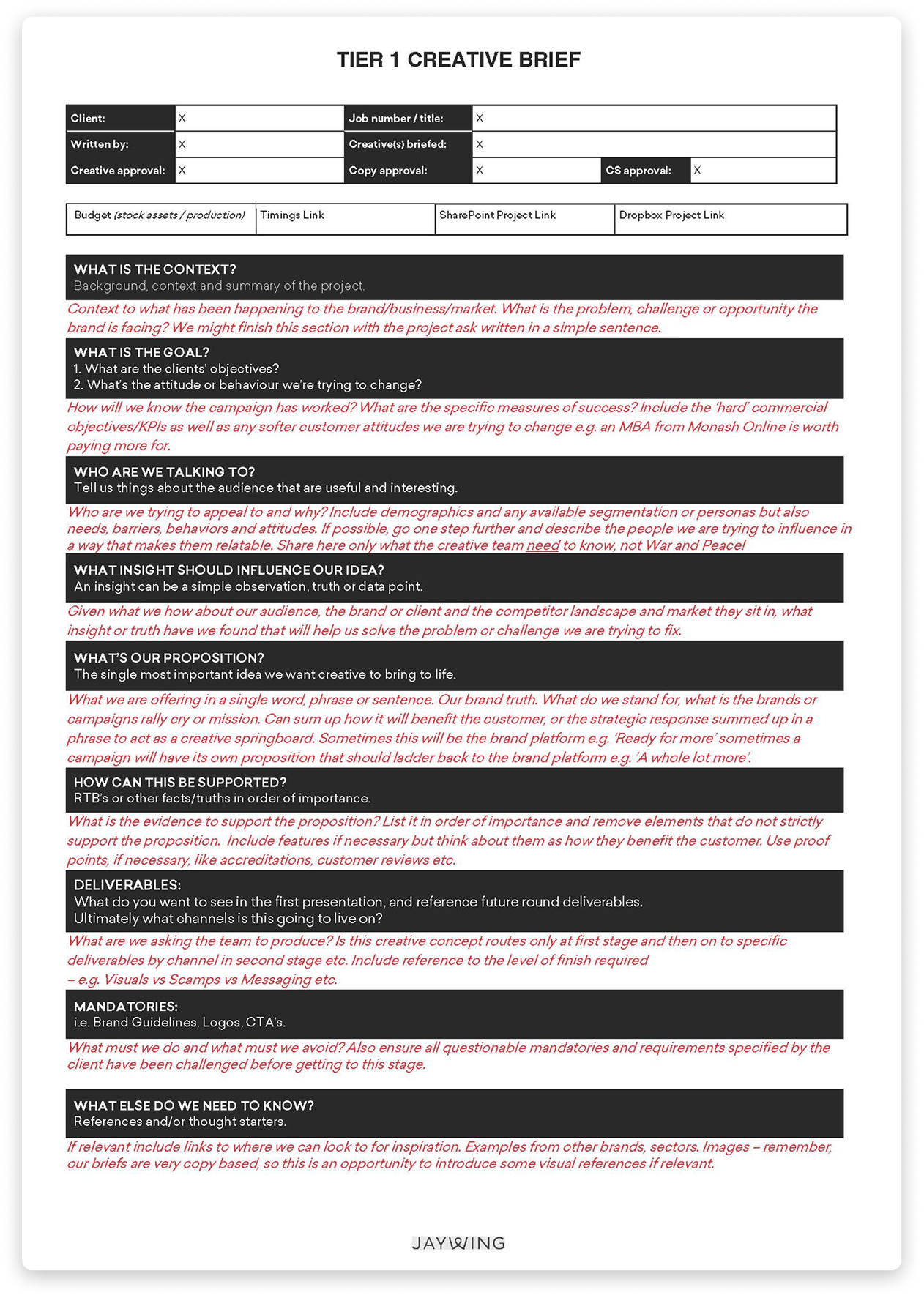
Creative Brief
Tier 1 Brief (Ideate):
A brief that requires strategic input and outlines requirements for higher level creative outputs - i.e. to deliver a full idea or new concept.
Tier Two
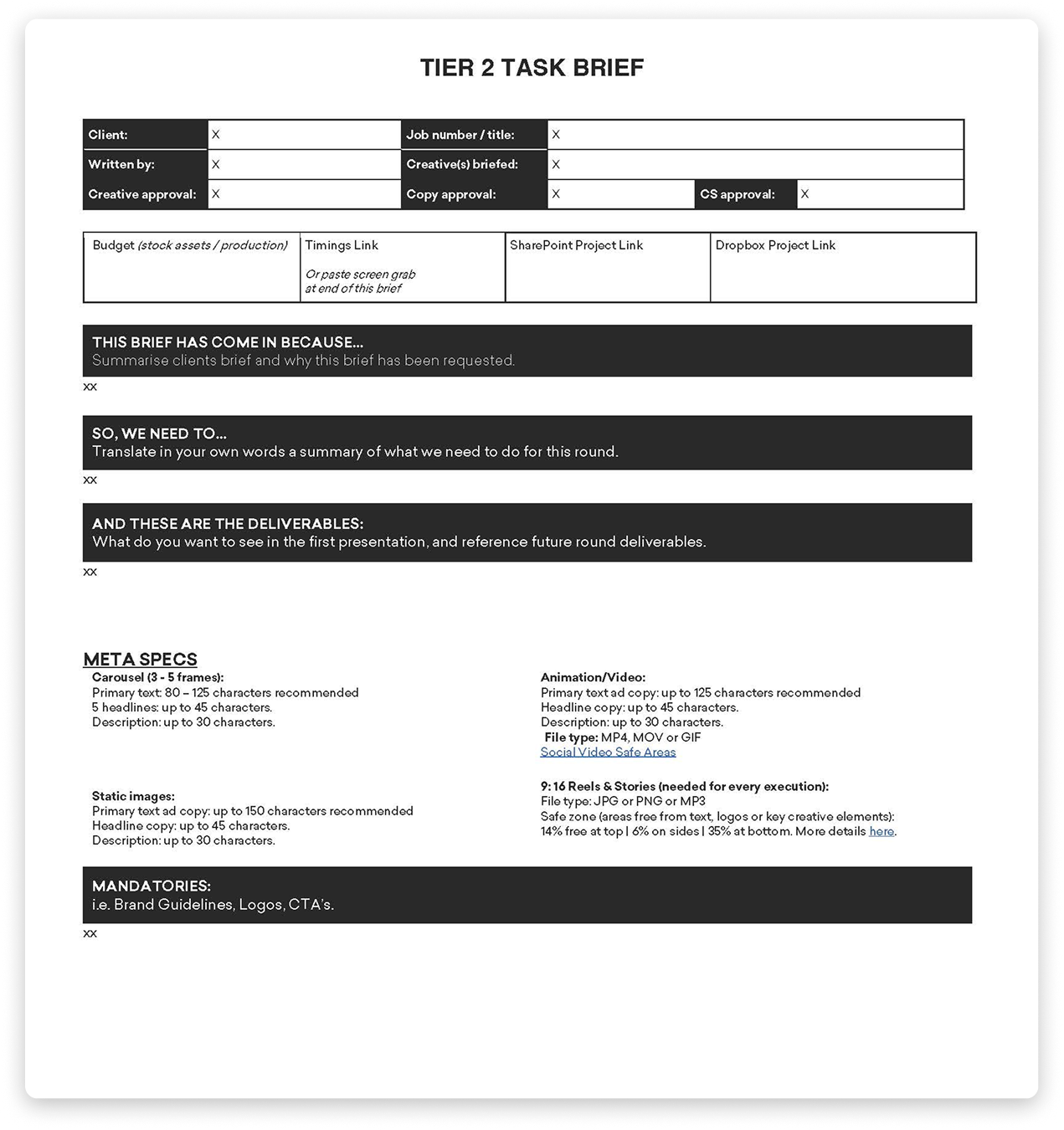
Task Brief
Tier 2 Brief (Task):
A brief that outlines requirements when a campaign exists but there's a requirement for extra assets and/or something to be changed - i.e. new visual or copy. Often used for tactical campaigns.
Straight forward ask, straight forward solution.
- Clearly and succinctly describe the purpose of the brief and the context behind it.
- Very functional and practical directives on what needs to be done.
- Deliverables can be quite prescriptive - anything we know that needs to be in the ads needs to be really clear in the brief.
- Mandatories can be links to docs.
Looking for:
- Short/sharp/succinct (2-page MAX).
- Minimal creative queries.
Tier Three
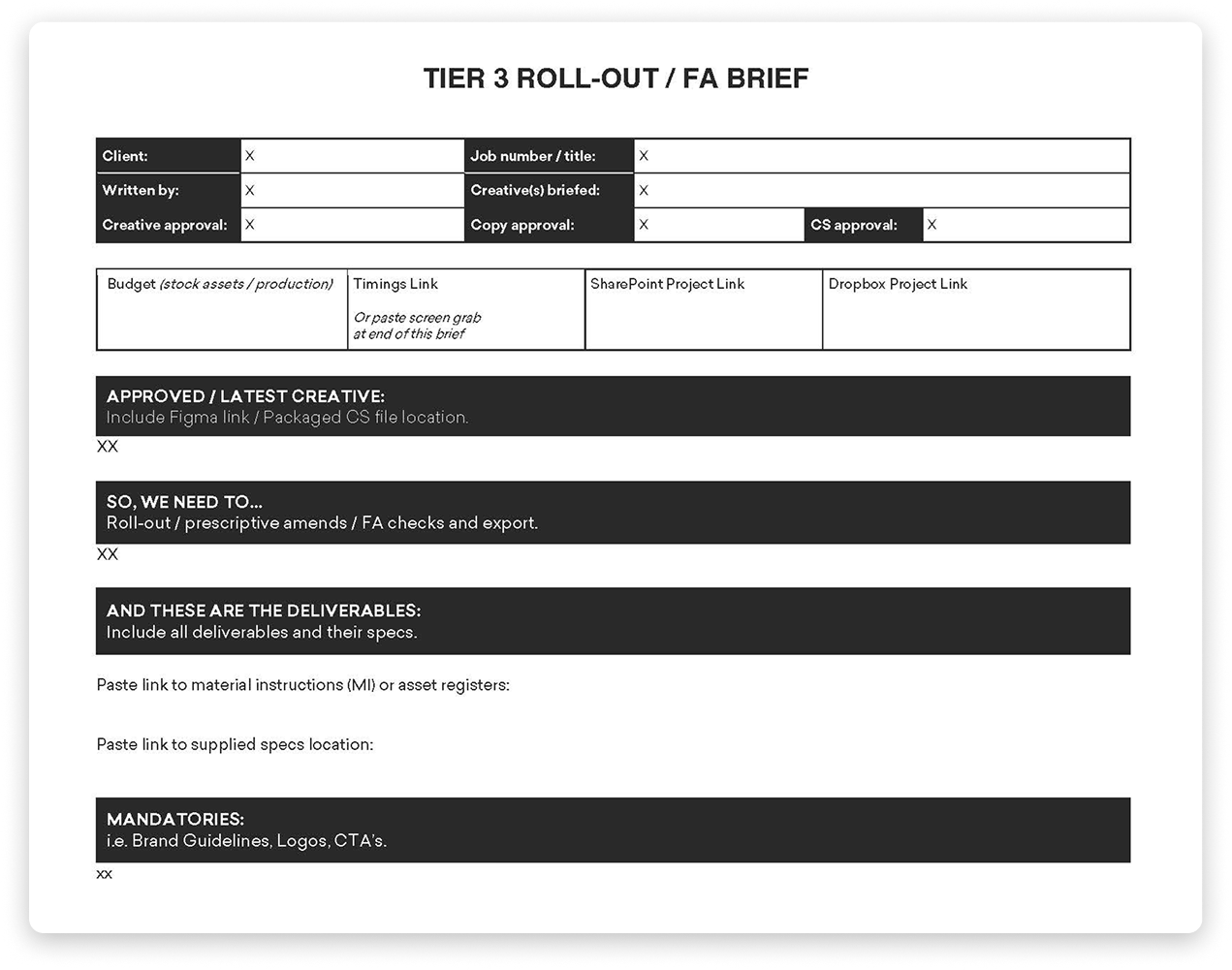
Roll-out / FA Brief
Tier 3 Brief (Roll-out & FA):
A brief requesting final outputs by a finished artist or motion artist. Or if the client has prescriptive image or copy amends or additional sizes, the task should be written up as a Tier 3 brief.
Aim: Clarity, ease, delivery.
- This should be the most punchy of all briefs written.
- You should already know exact deliverables + specs.
- You should already have your approved and signed off creative concepts.
- This is where you detail final asset development - licensing imagery, roll out across sizes/specs, FA proofing etc.
Looking for:
- Short/sharp/succinct (2-page MAX).
- Minimal creative queries.
Giving Feedback
Creative De-Brief
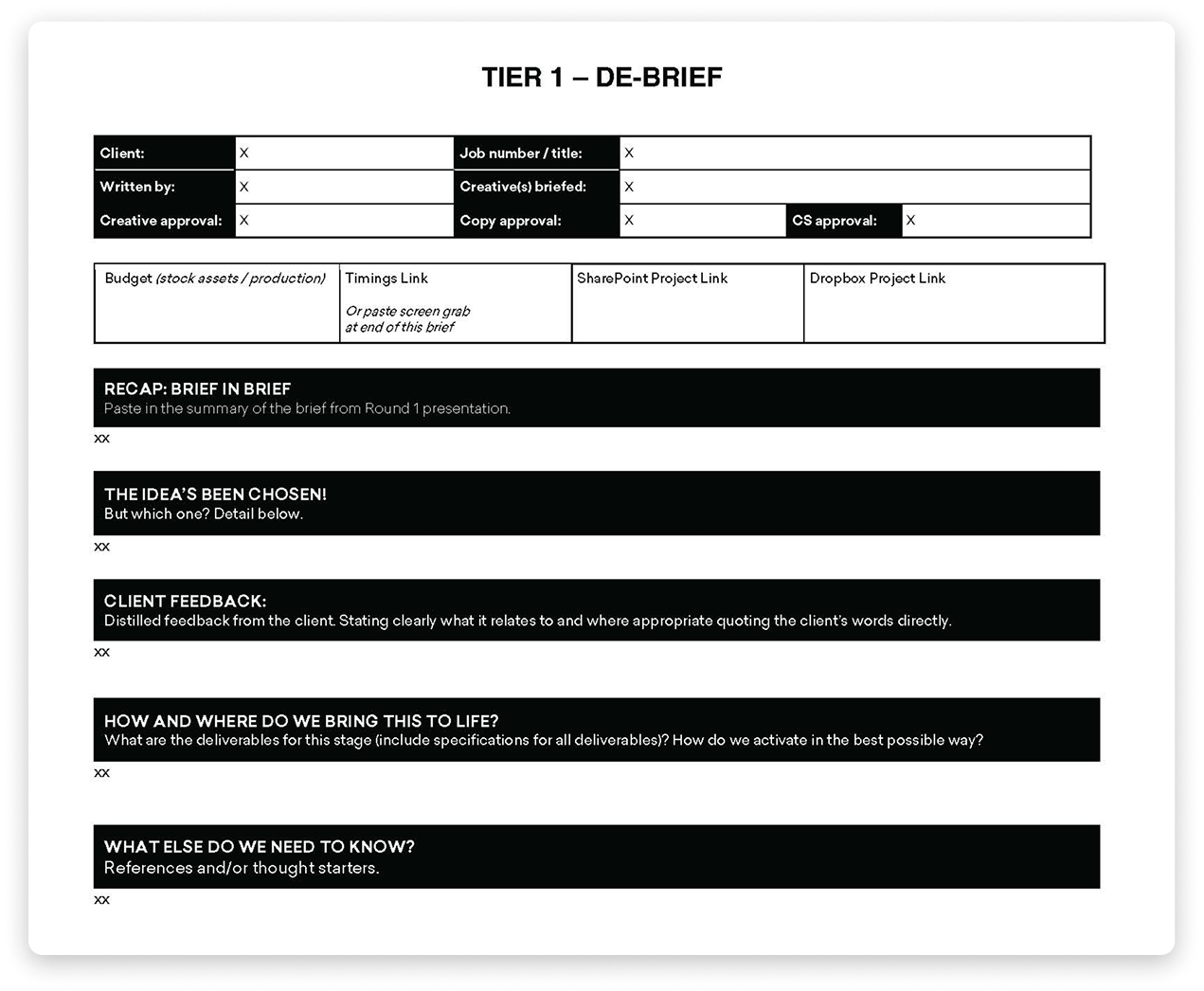
Tier One
Creative De-Brief
Recap: Brief in brief.
A reminder of the overall brief - a quick summary, not a complete repeat of everything we put in the original brief.
The idea that's been chosen.
Clear decision on the Route (or 2) that the client has chosen.
Client feedback.
This can't be lifted from a client email or paraphrased from comments or a marked-up PDF. Our job is to take everything the client has provided as feedback and think about how it will impact or change the creative - distilling it, clarifying it, and summarising it. What issues were there? Where are we falling short? What have we missed from the original brief? What new information has the client provided?
How and where do we bring this to life?
Until we have creative concept approval, we can't flesh out loads of formats/executions. So how can we phase the deliverables to minimise wastage of time and effort? Similarly, what do the clients need to see in order to get approval on the direction?
Tier Two
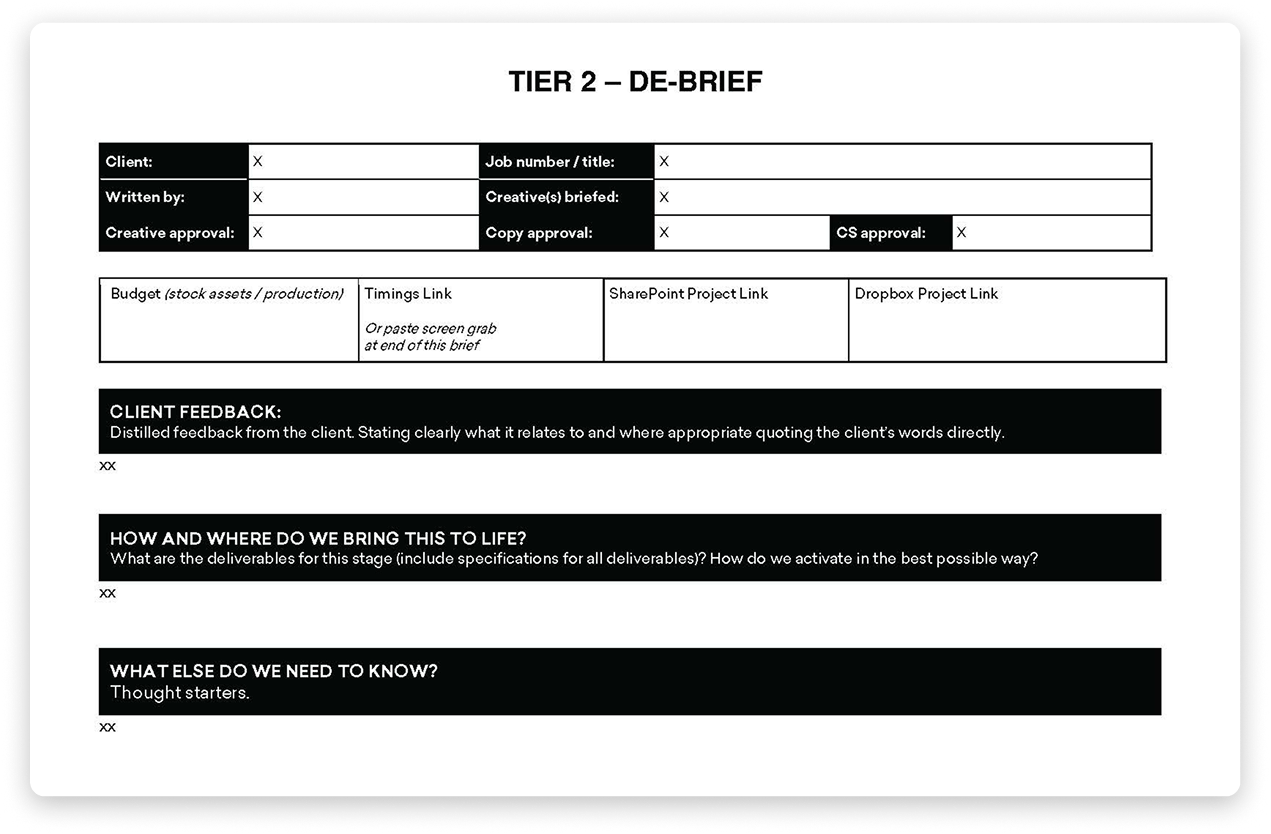
Task De-Brief
Client feedback.
This can't be lifted from a client email or paraphrased from comments or a marked-up PDF. Our job is to take everything the client has provided as feedback and think about how it will impact or change the creative - distilling it, clarifying it, and summarising it. What issues were there? Where are we falling short? What have we missed from the original brief? What new information has the client provided?
How and where do we bring this to life?
Until we have creative concept approval, we can't flesh out loads of formats/executions. So how can we phase the deliverables to minimise wastage of time and effort? Similarly, what do the clients need to see in order to get approval on the direction?
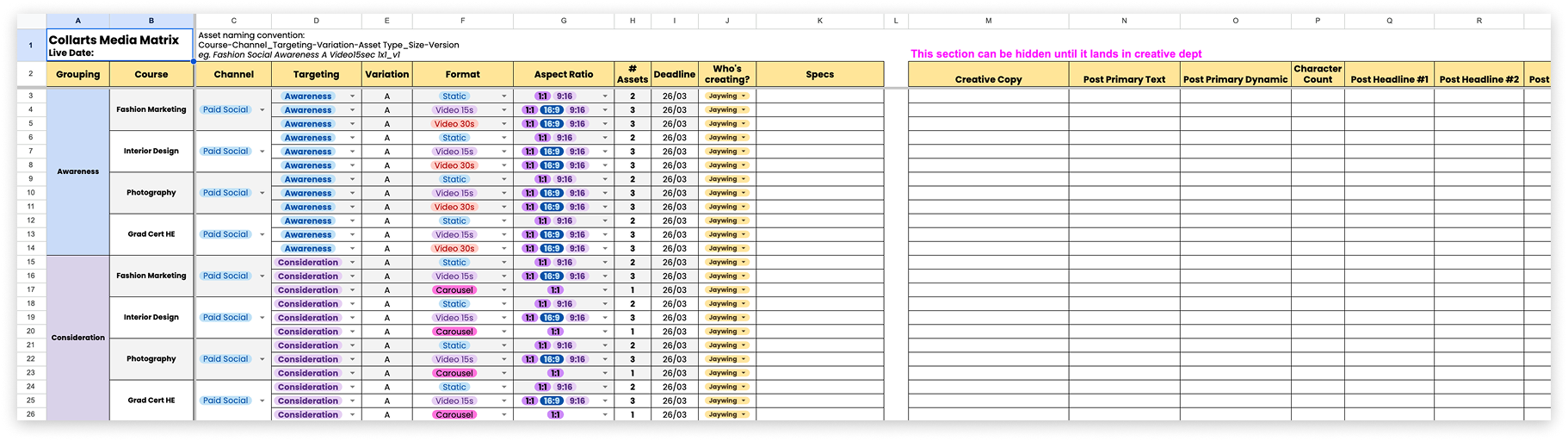
Jaywing Media Matrix
When supplying media requirements for supply of creative assets for our creative department (or external creative departments) it is ideal to receive an approved media matrix as per example below. If our creative department needs to estimate asset creation also have this finalised for accurate scoping.
If this is not possible it is imperative that a summary of ALL assets is supplied as per example and all testing variations are considered.